
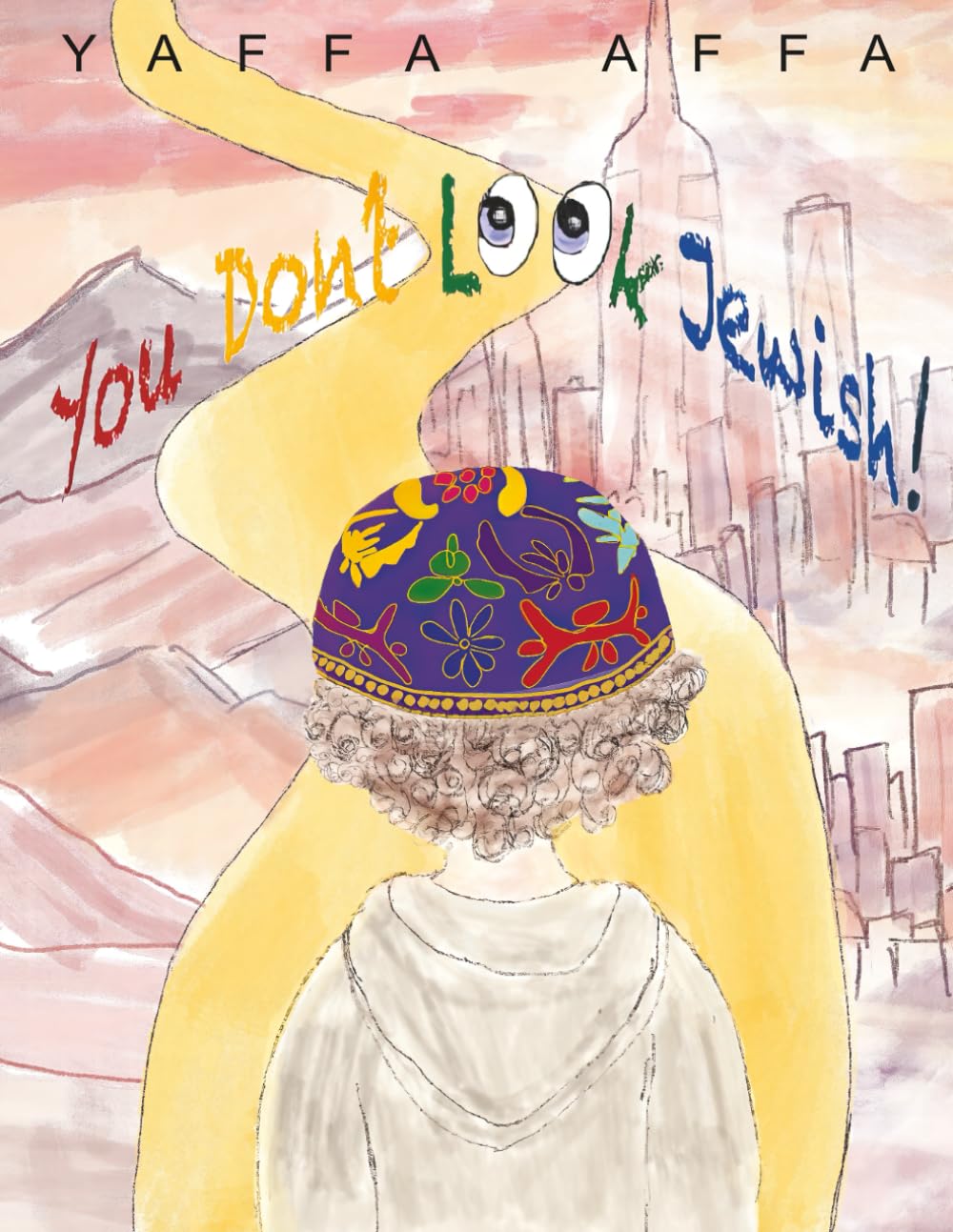
In a conversation with Be’chol Lashon, writer and illustrator Yaffa Borukhova shares the experiences and process that led to the creation of her debut children’s book, You Don’t look Jewish. Drawing from memories of growing up Jewish in Tajikistan and the Soviet Union, and later immigrating to the United States, she shares how years of hearing phrases like “You don’t look Jewish” eventually became the spark for a story centered on Jewish diversity, pride, and self-acceptance.
Written and illustrated during a time where diverse and uplifting Jewish stories are especially needed, the book became a creative outlet and a response to the absence of Jewish representation in conversations around diversity. In the interview below, Yaffa discusses the emotional journey behind the book, the influence of her Bukharian heritage, and why stories like this matter not only for Jewish children, but for anyone who has ever felt different or out of place.
What made you want to write a children’s book? Was the story in “You Don’t Look Jewish” a story you always wanted to tell? Or was there a moment of inspiration?
Throughout my life I kept hearing in different places, at different times: “You don’t look Jewish,” or “I didn’t know you were Jewish.”
I remember hearing things like that as a little girl in the Soviet Union, and then again after we immigrated to the United States. Being a minority in many environments, I often felt like an outsider. For a long time I thought it meant there was something wrong with me. I never felt like I truly belonged anywhere.
But where I grew up, Jewish wasn’t just a religion. Not many people really practiced religion. It was my nationality. In the Soviet system, nationality was written on your birth certificate. Mine did not say Tajik, Russian, or Soviet. It said Jewish.
 As I got older and met Jews from all over the world, I realized how ridiculous that statement really is. Jews don’t all look the same. Our people span continents, cultures, skin tones, and histories. I didn’t grow up religious, which made it even clearer to me that Jewish identity cannot be reduced to religion alone.
After October 7, many of the conversations happening outside of people who actually understand Jewish history were deeply misinformed. At the same time, parents were looking for books to read to their children to calm their fears and help them feel proud of who they are.
Throughout my career as a teacher, I worked in many schools. I saw shelves full of books about many kinds of diversity, but almost nothing about Jewish identity.
When COJECO opened applications for the Arts Against Antisemitism Fellowship, funded in part by the Mayor’s Office for the Prevention of Hate Crimes, I realized that if I didn’t channel my frustration with the chaos and ignorance of the world into something creative, I would implode.
I am a performing artist, but at that time I felt too sad and too angry to sing. So instead, I decided to channel those emotions into something quieter: a reflective children’s book, a completely new medium for me.
In “You Don’t Look Jewish” you touch on many themes–building confidence, the importance of community, embracing our Jewish pride. Why do you feel a book like this is important?
Biases and judgments start very early. By the time someone is an adult, it becomes much harder to change preconceived ideas. Children need to learn early on.
Growing up as a minority in the Soviet Union, I was embarrassed to reveal that I was Jewish. I didn’t fully understand what that meant, but I knew enough to want to conceal it. That was difficult to do because my name made it obvious. It took me years of workshops, seminars, and fellowships later in life in the United States to become comfortable with my Jewish identity.
In light of recent events and the sharp rise of antisemitism in the United States, I recognize myself in many of the Jewish children and what they may be experiencing today.
If adults on the world stage feel the need to apologize for being Jewish in America, then what might children be feeling and thinking? The consequences of these ideas, if not addressed early, can be serious.
Since the release of the book, I’ve heard from many people in different parts of the world who told me they have heard that phrase at one point or another in their lives. That is why books like this matter. Jewish children need to see their identity reflected in a way that instills pride and confidence in who they are. Children more broadly also benefit from learning about it and understanding it better. Jewish diversity should be part of the broader conversation about diversity.
If we do not help fill those gaps early, children often fill them later with misinformation, fear, and resentment. Jewish identity is not defined by appearance and cannot be reduced to religion alone. Jewish history and culture span continents, countries, and generations. The purpose of this book is to broaden that view.
You both illustrated and wrote You Don’t Look Jewish. What was creative process? And what it was like to be the book’s author and illustrator?
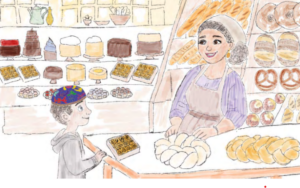
The story started out about a Jewish boy and eventually evolved into a Bukharian Jewish boy. The illustrations came after what I thought was the completed story, but the story kept changing even after the illustrations were done.
I am not a professional artist, far from it. Something that might take a trained illustrator an hour to sketch took me a couple of days of drawing and erasing. At one point an illustration accidentally turned out much better than I expected, so I adjusted the story to fit the image because I didn’t want to waste it.
So the process was a bit chaotic. Writing the story was actually the easier part. After the illustrations and manuscript were completed, I didn’t anticipate how much work the formatting would take. That stage alone took several weeks.
Even after the book was technically finished, and even published, I kept making edits. At some point I realized I could keep editing until the end of time. I decided to stop obsessing and release it.
Right now, I finally consider the book complete.
While “You Don’t Look Jewish” is fictionalized, are there elements of your own childhood that make their way into the book?
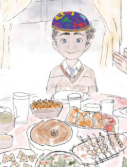
Some details of the story are very much real. I chose the name Simcha because it is the name of my nephew. The name means joy, and he is someone who brings me a lot of joy. Aviva is his little sister. Estera, the grandmother in the story, shares the name of my sister.
There are also many memories from my childhood woven into the book. The dog Alpha and the fragrant roses of my grandfather come from real memories of life in Tajikistan. Even the photos at the beginning of the book are real photographs of my family.
Some of the experiences in the story are also very real. Being bullied on the playground, feeling hesitant or embarrassed about being Jewish at first, and then eventually learning to own that identity are all things I experienced growing up.
Music is an important part of my life. That feeling of beauty and connection without words to something larger through music is something I know very well, so it naturally made its way into the story.
And the frozen yogurt truck instead of an ice cream truck is there because I like frozen yogurt.
Recently, someone who bought the book noticed that he shares the name of one of the characters and even happens to be in the same profession. I promise you that part was completely random.
In your book you write from the perspective of a young person. How has your Bukharian identity evolved from childhood into adulthood?
Growing up, I never really thought of myself as Bukharian first. I simply felt Jewish.
What always confused me were moments when I heard people downplaying their Bukharian background around other communities, or trying to distance themselves from it by explaining why they were somehow different. That always struck me as unnecessary and a bit sad.
I come from a very rich culture with deep traditions, language, music, and history. Like many immigrant communities, Bukharian Jews are still finding their footing in America, but the community is doing well.
As I’ve gotten older, I’ve come to appreciate that heritage even more. It’s something worth preserving and sharing, not apologizing for.
Be’chol Lashon does a lot of work and community events in New York. What do you think makes NYC a uniquely fitting setting for your book?
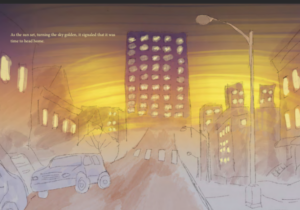
Organizations like Be’chol Lashon create spaces where the many different Jewish communities of the world can actually see one another. New York is one of the few cities where Jews from Central Asia, Ethiopia, Russia, Morocco, Iran, and many other places all live side by side.
For someone like me, who grew up Bukharian Jewish, that kind of environment is meaningful. When people begin meeting Jews from different backgrounds, we start to understand that there is a unifying thread that runs through all of us. It has nothing to do with country of origin, status, or outward differences.
A book like You Don’t Look Jewish! can be a good conversation starter for that.
Your book, and your openness have given us such wonderful insight into you and your book! Is there anything else you’d like readers to know about you or the book?
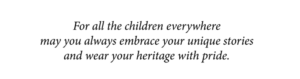
This book is not just for children. It is written for adults as well. And it’s not only for Jewish children. It’s for anyone who has ever felt different or out of place.
Follow Yaffa on Instagram @YaffaAffa and purchase her book here!